Discover the Top 7 Best Residential Areas in Dubai for Luxury Living
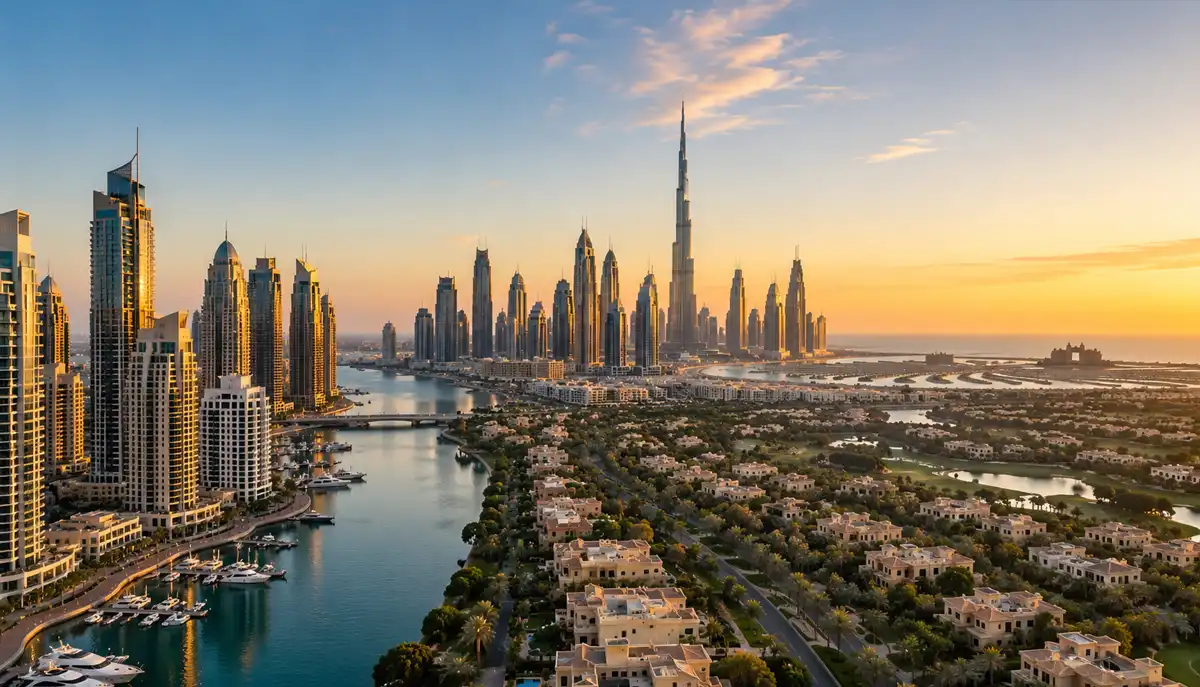
Choosing the best residential areas in Dubai can define the quality of your lifestyle, the returns on your investment, and the long-term value of your portfolio. Dubai’s real estate market attracted over AED 761 billion in transactions during 2025 — a record-breaking figure that underscores the emirate’s position as one of the most sought-after property destinations on the planet. Whether you are an expat relocating from Europe, a seasoned investor expanding a global portfolio, or a family searching for the perfect community to call home, the neighbourhood you select matters as much as the property itself.
In this comprehensive guide, Divine LiWing — a luxury real estate consultancy headquartered in Business Bay — walks you through the top seven Dubai living areas that combine world-class amenities, strong capital appreciation, and an exceptional quality of life. By the end, you will have a clear picture of where to live in Dubai based on your priorities, whether those centre on waterfront views, family-friendly green spaces, or proximity to the city’s financial core.
Alongside each neighbourhood profile, you will find current investment ranges, estimated rental yields, lifestyle highlights, and practical tips for expats and first-time investors. Because the Dubai property market evolves rapidly, this guide reflects 2026 data and market conditions — ensuring the information you rely on is current and actionable.
Overview of Dubai’s Real Estate Market in 2026
Dubai’s property sector continues to outperform global benchmarks. According to the Dubai Land Department (DLD), the first half of 2026 recorded more than 90,000 real estate transactions, with residential properties accounting for roughly 72% of total volume. Furthermore, average apartment values in prime locations appreciated between 8% and 14% year-on-year, while villa segments in gated communities in Dubai saw even steeper gains. Notably, the off-plan segment has become a dominant force, accounting for nearly 60% of total sales as investors capitalise on developer payment plans and pre-completion appreciation.
Several factors fuel this momentum. Visa reforms — including the Golden Visa programme for property investors committing AED 2 million or more — attract high-net-worth individuals from over 200 nationalities. Additionally, the UAE’s zero-income-tax policy, world-class infrastructure, and consistent regulatory transparency through the Real Estate Regulatory Agency (RERA) create a stable environment for both end-users and investors. Indeed, RERA’s escrow account regulations protect off-plan investors by ensuring that developer funds are used exclusively for the designated project.
Why Are Residential Property Values Rising in Dubai?
Population growth is the primary driver. Dubai’s resident population crossed 3.8 million in 2025 and is projected to exceed 5 million by 2030 under the D33 economic agenda. Consequently, demand for quality housing — from affordable apartments to ultra-premium villas — outpaces new supply in established communities. Moreover, the emirate’s hosting of major global events, the expansion of Al Maktoum International Airport, and ongoing investment in metro connectivity keep the real estate cycle robust.
Equally important, Dubai’s diversification away from oil dependency — with tourism, technology, and finance now driving over 70% of GDP — creates sustainable employment growth. As a result, expatriate professionals continue to relocate to the emirate in record numbers, intensifying demand for rental apartments in Dubai across every segment from affordable studios to premium penthouses.
Is Dubai real estate a good investment in 2026?
Dubai real estate remains a strong investment in 2026 due to rising property values, visa incentives such as the Golden Visa, zero income tax, and growing demand fuelled by population expansion. Rental yields in prime communities range from 5% to 9%, outperforming most European and North American markets.
Importance of Choosing the Right Residential Area
Not every community suits every lifestyle. A young professional seeking a vibrant social scene will thrive in a waterfront district with walkable dining and nightlife. Meanwhile, a family with school-age children may prioritise gated communities in Dubai that offer landscaped parks, international schools, and low-traffic streets. Similarly, an investor focused purely on rental yield will gravitate toward areas with high demand for rental apartments in Dubai, such as Dubai Marina or JBR.
Because each community has a distinct personality, visiting in person remains essential. What looks perfect on paper may feel different on the ground — traffic patterns, noise levels, and community energy can only be assessed first-hand. For this reason, Divine LiWing arranges complimentary community tours that let you experience each neighbourhood before committing to any paperwork.
Before shortlisting a location, consider these core factors:
- Connectivity: Proximity to the Metro, major highways (Sheikh Zayed Road, Al Khail Road), and Dubai International Airport.
- Amenities: Availability of supermarkets, healthcare facilities, fitness centres, and dining options within walking distance.
- Community vibe: Does the area cater to singles, couples, or families? Is the atmosphere cosmopolitan or suburban?
- Investment potential: Historical price appreciation, upcoming infrastructure projects, and projected rental yields.
- Green spaces in Dubai: Access to parks, jogging tracks, waterfront promenades, and pet-friendly zones.
For a deeper look at the advantages of owning property in the emirate, explore Divine LiWing’s guide to the benefits of owning property in Dubai.
1. Dubai Marina — The Crown Jewel of Waterfront Living
Dubai Marina consistently ranks among the best residential areas in Dubai, and for good reason. Built around a 3.5-kilometre man-made canal, this master-planned community combines high-rise luxury towers, a bustling marina walk, and direct access to JBR beach — all wrapped in a cosmopolitan lifestyle that appeals to professionals, couples, and investors alike.
Originally developed by Emaar Properties and subsequently expanded by DAMAC, Select Group, and other major developers, Dubai Marina now houses approximately 120 residential towers and over 50,000 residents. Because of its density and walkability, the community functions almost as a self-contained city — a place where you can live, work, dine, and socialise without ever needing a car.
Features and Amenities in Dubai Marina
Residents enjoy a pedestrian-friendly promenade lined with over 200 restaurants, cafés, and retail outlets. Additionally, the Dubai Marina Mall houses a six-screen cinema, a major supermarket, and dozens of boutique stores. For fitness enthusiasts, outdoor running tracks along the waterfront, yoga studios, and multiple gyms are within a five-minute walk of most towers.
Connectivity is another major strength. Dubai Marina is served by two Metro stations — DAMAC Properties and Jumeirah Lakes Towers — plus the Dubai Tram, which links directly to Palm Jumeirah via the monorail. Furthermore, Sheikh Zayed Road access makes Downtown Dubai reachable in approximately 15 minutes. For professionals working in Internet City, Media City, or Knowledge Park, the commute is under ten minutes — a factor that significantly boosts demand for dubai residences in this community.
Rental Apartments in Dubai Marina
Dubai Marina remains one of the top destinations for rental apartments in Dubai. Studio apartments lease from approximately AED 55,000 per year, while one-bedroom units range between AED 80,000 and AED 120,000 depending on the tower and view. Consequently, gross rental yields average 6.5% to 7.5%, making Dubai Marina a consistent performer for investors seeking dependable returns.
Popular towers include Marina Gate, Cayan Tower, and Princess Tower — the latter being one of the tallest residential buildings in the world. Each offers a mix of studio, one-bedroom, and two-bedroom configurations, catering to singles, couples, and small families. In addition, newer developments such as Marina Star and LIV Marina have introduced hotel-style amenities — including concierge services, co-working spaces, and rooftop infinity pools — that appeal to the growing digital nomad and remote-worker demographic.
What is the average lease value for apartments in Dubai Marina?
In 2026, studio apartments in Dubai Marina lease from roughly AED 55,000 annually. One-bedroom apartments range from AED 80,000 to AED 120,000, while two-bedroom units can reach AED 180,000 or more depending on the tower, floor level, and marina or sea view.
2. Downtown Dubai — The Heartbeat of the City
Downtown Dubai is the address that needs no introduction. Home to the Burj Khalifa, The Dubai Mall, and the Dubai Fountain, this district represents the pinnacle of urban luxury. For anyone asking “where to live in Dubai” when prestige and convenience are priorities, Downtown delivers on every count.
Attractions and Lifestyle in Downtown Dubai
Beyond the iconic landmarks, Downtown Dubai offers a refined lifestyle centred on art, culture, and fine dining. The Dubai Opera hosts world-class performances year-round, while Souk Al Bahar provides a traditional marketplace atmosphere alongside modern boutiques. Moreover, Mohammed Bin Rashid Boulevard — a tree-lined promenade encircling the Burj Khalifa district — serves as a social hub for morning jogs, evening strolls, and outdoor dining.
Likewise, The Dubai Mall — the world’s largest shopping destination by total area — provides over 1,200 retail outlets, an Olympic-sized ice rink, an underwater aquarium, and a dedicated Fashion Avenue for luxury brands. Because all of these attractions sit within walking distance of Downtown residences, property owners enjoy a lifestyle that rivals Mayfair, Manhattan, or the Champs-Élysées.
Families benefit from proximity to international schools such as GEMS Wellington Academy and healthcare facilities including Mediclinic Parkview Hospital. Additionally, green spaces in Dubai’s downtown area — including Burj Park — offer pockets of tranquillity amidst the urban energy.
Real Estate Options in Downtown Dubai
Downtown Dubai offers a broad spectrum of residences. Off-plan opportunities from developers like Emaar provide entry points starting at approximately AED 1.2 million for a studio, while premium penthouse units in towers such as The Address Residences and Burj Vista command investments of AED 10 million and above. Average capital appreciation in Downtown has consistently tracked between 9% and 13% annually over the past three years.
| Property Type | Starting Investment (AED) | Avg. Annual Yield |
|---|---|---|
| Studio | 1,200,000 | 5.5%–6.5% |
| 1-Bedroom | 1,800,000 | 5.0%–6.0% |
| 2-Bedroom | 2,800,000 | 4.5%–5.5% |
| Penthouse | 10,000,000+ | 3.5%–4.5% |
If you are an international investor wondering whether you can own property in this district, Divine LiWing’s detailed guide on whether foreigners can own property in Dubai answers every question.
3. Palm Jumeirah — Exclusive Island Living
Palm Jumeirah remains the most recognisable address in the global luxury property market. Shaped like a palm tree and extending into the Arabian Gulf, this man-made island epitomises exclusivity. For those seeking gated communities in Dubai with absolute waterfront privacy, Palm Jumeirah delivers a lifestyle that few locations on earth can match.
What Makes Palm Jumeirah an Exclusive Gated Community?
Security is paramount on the Palm. Gated entry points, 24/7 surveillance, and private beach access ensure that residents enjoy peace of mind. Moreover, the island’s fronds — individual cul-de-sac streets branching off the main trunk — provide a quiet, suburban feel despite being just minutes from the bustle of Dubai Marina and JBR.
Architectural highlights include the Atlantis The Royal resort, the Nakheel Mall, and a growing roster of ultra-luxury branded residences. Notably, Six Senses Residences, Dorchester Collection, and OMNIYAT’s One Palm have redefined waterfront premium living on the island.
Benefits of Living on Palm Jumeirah
Beyond prestige, Palm Jumeirah offers tangible lifestyle benefits. Residents wake to unobstructed sea views, enjoy private beach stretches, and access a boardwalk spanning 11 kilometres — ideal for cycling, jogging, or sunset walks. Additionally, the monorail connecting the island to Dubai Tram ensures seamless connectivity without relying on a car.
From an investment standpoint, Palm Jumeirah villas have experienced double-digit appreciation year after year. A four-bedroom signature villa that was valued at AED 15 million in 2022 now commands upwards of AED 30 million. For investors and lifestyle seekers alike, the island represents enduring value.
Additionally, Palm Jumeirah’s restaurant and leisure scene has matured significantly. High-end dining destinations such as Nobu, Ossiano, and STAY by Yannick Alléno attract residents and visitors alike. Meanwhile, The Pointe — a waterfront dining and entertainment destination at the island’s crescent — offers fountain shows rivalling the Burj Khalifa’s display. Because of this lifestyle depth, Palm Jumeirah properties command a prestige premium that shows no sign of fading.
Are there affordable options available on Palm Jumeirah?
While Palm Jumeirah is known for premium residences, studio and one-bedroom apartments in towers such as Shoreline Apartments and Golden Mile start from approximately AED 1.5 million. These units provide access to the island’s amenities at a relatively accessible entry point compared to villa fronds.
Ready to explore the best residential areas in Dubai? Divine LiWing’s property advisory team provides personalised community tours, investment analysis, and end-to-end support. Speak with an advisor today.
4. Arabian Ranches — Family-Friendly Suburban Comfort
Arabian Ranches is the gold standard for family living in Dubai. Developed by Emaar Properties, this master-planned community sits along Al Qudra Road and offers a tranquil, suburban environment with lush landscaping, community pools, and an award-winning golf course — all within a 25-minute drive of Downtown Dubai.
Why Do Families Choose Arabian Ranches?
Families gravitate toward Arabian Ranches for its unmatched combination of safety, green spaces, and top-tier education. The community is home to JESS Arabian Ranches (a highly regarded British-curriculum school), multiple nurseries, and the Ranches Souk retail centre, which includes a Carrefour supermarket, medical clinics, and casual dining outlets.
Furthermore, the Arabian Ranches Golf Club — an 18-hole Ian Baker-Finch–designed championship course — provides a recreational centrepiece. Cycling tracks, equestrian facilities, and community parks give children and adults plenty of outdoor activity options, making Arabian Ranches one of the greenest dubai living areas in the city.
Equally compelling is the community’s sense of belonging. Organised events — including outdoor movie nights, farmers’ markets, and seasonal festivals — foster genuine neighbourly connections that are harder to find in high-rise communities. For families relocating from suburban settings in Europe, North America, or Australasia, Arabian Ranches replicates that familiar, close-knit atmosphere while adding the warmth and safety of Dubai.
Affordable Housing Options in Arabian Ranches
Compared to waterfront districts, Arabian Ranches offers more space for the investment. Townhouses in sub-communities like Palmera and Casa start from approximately AED 2.5 million, while larger detached villas in Alma, Aseel, and Savanna range from AED 4 million to AED 9 million. For families seeking affordable housing in Dubai without compromising on community quality, Arabian Ranches and its newer extension, Arabian Ranches III, present compelling opportunities.
- Palmera Townhouses: 3-bed units from AED 2.5 million — ideal first-time family investment.
- Savanna Villas: 4–5-bed standalone villas from AED 5 million, featuring private gardens and pools.
- Arabian Ranches III (Sun by Emaar): Newly launched townhouses from AED 1.8 million — the most accessible entry point.
5. Jumeirah Beach Residence (JBR) — Beachfront Urban Living
JBR occupies a 1.7-kilometre stretch of prime beachfront along the Dubai coastline. Originally developed by Dubai Properties, JBR comprises 40 residential towers organised into six themed clusters, housing over 6,000 apartments. For anyone searching for places in dubai to live that blend beach access with urban convenience, JBR is hard to beat.
What Does Beachfront Living in JBR Look Like?
Daily life at JBR revolves around The Walk — an outdoor shopping and dining promenade — and The Beach, an open-air leisure destination with cinemas, water sports, and boutique retail. Residents step out of their lobbies and onto the sand within minutes. Moreover, the community hosts regular weekend markets, live entertainment, and food festivals that foster a lively social atmosphere.
Water-based activities are a defining perk. Kayaking, paddleboarding, jet skiing, and parasailing operators line JBR beach, while Dubai Marina Yacht Club is a short stroll away. For those who prefer structured fitness, multiple gyms, yoga studios, and CrossFit boxes operate within the JBR cluster.
Notably, JBR’s location places it within a five-minute drive of Dubai Internet City and Media City, making it an attractive address for professionals in the technology and creative industries. Because of this geographic advantage, one-bedroom apartments in JBR maintain occupancy rates above 90% throughout the year — a statistic that few other beachfront communities in the region can match.
Community Features and Investment Outlook
JBR’s investment appeal lies in its consistently high occupancy rates. Because the area attracts both long-term residents and short-term holiday visitors, property owners benefit from flexible leasing strategies. Gross yields for furnished one-bedroom units average 7% to 8%, among the highest in Dubai’s prime beachfront segment.
Entry-level investments start at approximately AED 1.3 million for a studio, while two-bedroom sea-facing apartments range from AED 2.5 million to AED 4 million. Additionally, several towers — including Sadaf, Shams, and Bahar — have undergone lobby and common-area upgrades, boosting long-term capital value.
Surprisingly, JBR also caters to families despite its reputation as a social hub. Multiple nurseries and primary schools operate within a short drive, and the beachfront itself serves as an enormous, free-access playground for children. Because the community is pedestrian-friendly, parents can navigate daily routines — from school drop-offs to grocery runs — without relying heavily on vehicles.
6. Emirates Hills — The Beverly Hills of Dubai
Emirates Hills is Dubai’s most prestigious villa community. Often referred to as “the Beverly Hills of the Middle East,” this gated enclave surrounds the Montgomerie Golf Club and offers plot sizes ranging from 10,000 to over 50,000 square feet. For ultra-high-net-worth individuals seeking modern villas in Dubai with complete privacy, Emirates Hills is the definitive choice.
Luxury Villas and Estates in Emirates Hills
Every residence in Emirates Hills is custom-built. There are no cookie-cutter designs — each villa reflects its owner’s architectural vision, resulting in a collection of truly unique estates. Mansions here routinely feature private swimming pools, home cinemas, wine cellars, staff quarters, and landscaped gardens with fountains and mature trees.
Architecturally, styles range from contemporary minimalism to Mediterranean grandeur. Several properties incorporate sustainable features such as solar panels, greywater recycling systems, and energy-efficient glazing — a growing trend among environmentally conscious investors.
Investment Potential of Emirates Hills
Emirates Hills is a capital-preservation market rather than a high-yield leasing play. Villas transact from AED 25 million to over AED 200 million, placing this community firmly in the ultra-luxury tier. However, scarcity drives value — there are only approximately 600 plots in the entire community, and no new land is being released.
Historically, Emirates Hills has demonstrated steady appreciation with low volatility, making it a safe harbour for investors seeking to park significant capital in a tangible, freehold asset. Moreover, the community’s proximity to Dubai Marina, Media City, and Internet City adds practical convenience for business owners and executives.
Without doubt, the exclusivity factor is Emirates Hills’ greatest asset. Unlike newer communities that release thousands of units per phase, Emirates Hills has a finite land bank — once every plot is developed, no additional supply can enter the market. As a result, long-term scarcity drives consistent value growth regardless of broader market cycles. For ultra-high-net-worth investors, this scarcity premium mirrors the appeal of London’s Belgravia or Monaco’s Carré d’Or.
Who typically resides in Emirates Hills?
Emirates Hills attracts CEOs, entrepreneurs, royal family members, and international celebrities. Residents value the community’s absolute privacy, custom-built estates, and proximity to the Montgomerie Golf Club. Ownership is freehold, meaning both UAE nationals and international investors can own property here.
7. DIFC (Dubai International Financial Centre) — Urban Sophistication Meets Business
DIFC is Dubai’s premier financial hub and, increasingly, one of the most desirable dubai areas to live for professionals who want to eliminate the commute entirely. Situated between Downtown Dubai and the World Trade Centre along Sheikh Zayed Road, DIFC combines a regulated financial ecosystem with premium residential towers, art galleries, and upscale dining.
Urban Lifestyle and Business Hub
Living in DIFC means being surrounded by Fortune 500 regional headquarters, global law firms, and hedge fund offices. However, DIFC is far more than a business district. Gate Village — a cluster of contemporary buildings within DIFC — houses art galleries including Opera Gallery and Tabari Artspace, alongside Michelin-starred restaurants such as ZUMA and La Petite Maison. Additionally, DIFC hosts Art Nights and literary festivals that draw creatives from across the region.
Recent developments have expanded residential options significantly. The ICD Brookfield Place tower added premium office and retail space, while residential projects like One Park Avenue and Ritz-Carlton Residences DIFC cater to professionals seeking walk-to-work convenience.
Also worth noting is DIFC’s regulatory framework, which operates under its own independent legal system based on English common law. For finance professionals, this means working and living within a jurisdiction that mirrors the regulatory standards of London and New York. Consequently, DIFC attracts a resident profile that is heavily weighted toward senior executives, fund managers, and legal professionals — a demographic that sustains strong demand for premium rental apartments in Dubai’s financial core.
Prospective Areas to Live in and Around DIFC
DIFC’s residential inventory is relatively limited compared to communities like Dubai Marina or Downtown, which keeps demand — and values — elevated. One-bedroom apartments in DIFC start from approximately AED 1.5 million, while two-bedroom units range from AED 2.5 million to AED 4.5 million. Rental yields hover around 5.5% to 6.5%.
For those who appreciate the DIFC lifestyle but seek more space, neighbouring communities such as Za’abeel, World Trade Centre Residences, and Business Bay offer complementary options within walking or short driving distance. Business Bay, in particular, has emerged as a dynamic extension of DIFC’s professional ecosystem.
| Residential Area | Best For | Starting Investment (AED) | Avg. Rental Yield |
|---|---|---|---|
| Dubai Marina | Young professionals, investors | 900,000 | 6.5%–7.5% |
| Downtown Dubai | Urban luxury seekers | 1,200,000 | 5.0%–6.5% |
| Palm Jumeirah | Premium waterfront living | 1,500,000 | 4.0%–6.0% |
| Arabian Ranches | Families, suburban comfort | 1,800,000 | 4.5%–5.5% |
| JBR | Beachfront lifestyle | 1,300,000 | 7.0%–8.0% |
| Emirates Hills | Ultra-high-net-worth investors | 25,000,000 | 2.5%–3.5% |
| DIFC | Finance professionals | 1,500,000 | 5.5%–6.5% |
How to Choose the Best Residential Area in Dubai for Your Needs
Selecting among the best residential areas in Dubai requires aligning your personal priorities with each community’s strengths. Below is a practical framework to guide your decision.
Step 1: Define Your Lifestyle Priority
Start by identifying what matters most. If beach access and a vibrant social scene top your list, Dubai Marina and JBR are natural fits. Conversely, if you need quiet streets, large gardens, and proximity to schools, Arabian Ranches stands out.
Step 2: Set Your Investment Range
Establish a clear budget early. Dubai’s freehold market offers entry points from under AED 1 million in emerging areas to AED 200 million–plus in Emirates Hills. Additionally, factor in service charges, which vary significantly — from AED 10 per square foot in older buildings to AED 30 or more in branded residences. Beyond the initial outlay, also account for the 4% DLD transfer fee payable upon registration, agent professional fees (typically 2%), and any mortgage arrangement charges if you are financing the acquisition.
Step 3: Evaluate Rental Yield vs. Capital Growth
High-yield areas such as JBR and Dubai Marina suit investors focused on immediate cash flow. Meanwhile, capital-growth plays like Palm Jumeirah and Emirates Hills reward patient investors with long-term appreciation. A balanced portfolio might include exposure to both categories.
To illustrate, an investor allocating AED 5 million could acquire a one-bedroom apartment in Dubai Marina (strong yield) and a townhouse in Arabian Ranches III (capital growth with family-friendly appeal). By diversifying across community types, the portfolio captures both recurring income and long-term equity appreciation — reducing overall risk while maximising total return.
Step 4: Consult a Trusted Advisor
Working with a knowledgeable real estate consultancy makes the process smoother and reduces risk. Divine LiWing’s team arranges community tours, connects you with vetted mortgage consultants, and provides data-driven insights on every community mentioned in this guide. Learn how to identify the right partner by reading our article on how to find the best real estate broker in Dubai.
What are the most affordable places to live in Dubai for families?
For families seeking affordable housing in Dubai with strong community infrastructure, Arabian Ranches III, Dubai Hills Estate, and JVC (Jumeirah Village Circle) offer townhouses and apartments starting from AED 800,000 to AED 1.8 million. Each community includes parks, schools, and retail centres within walking distance.
Service Charges and Annual Ownership Fees Across Dubai Communities
Beyond the initial investment, annual service charges represent a critical factor when comparing the best residential areas in Dubai. These fees — charged per square foot by the community’s master developer or homeowners’ association — cover maintenance, security, landscaping, pool and gym upkeep, and common-area utilities.
How Do Service Charges Vary Between Communities?
Service charges differ significantly across communities, and understanding these differences helps investors project true net yields accurately.
| Community | Avg. Service Charge (AED/sq ft) | What It Covers |
|---|---|---|
| Dubai Marina | 14–20 | Pool, gym, lobby, parking, basic landscaping |
| Downtown Dubai | 18–28 | Premium lobby, concierge, Burj Khalifa views maintenance |
| Palm Jumeirah | 15–25 | Beach access, island security, landscaping |
| Arabian Ranches | 8–14 | Community parks, golf course upkeep, gate security |
| JBR | 16–22 | Beach maintenance, retail promenade, tower facilities |
| Emirates Hills | 3–6 | Road maintenance, gate security, minimal common areas |
| DIFC | 20–30 | Premium facilities, art galleries, district security |
As the table shows, Emirates Hills charges the lowest service fees because villa owners maintain their own properties and share only road and gate infrastructure. Conversely, branded residences in Downtown Dubai and DIFC command higher fees due to hotel-grade amenities and staffing levels. Before finalising any acquisition, request the latest RERA service charge index for the specific building or sub-community — this public register ensures transparency and prevents unexpected increases.
Emerging Dubai Areas to Watch in 2026 and Beyond
Beyond the established seven, several emerging communities are rapidly gaining attention from investors and end-users alike.
- Dubai Hills Estate: A master-planned Emaar community with a championship golf course, a sprawling central park, and the newly opened Dubai Hills Mall. Apartments start from AED 1 million.
- Dubai South (Expo City): Anchored by the legacy infrastructure of Expo 2020, Dubai South benefits from proximity to Al Maktoum International Airport and offers some of the emirate’s most competitive entry-level prices.
- Jumeirah Village Circle (JVC): Popular among young professionals and small families, JVC offers modern apartments and townhouses with yields exceeding 7%, making it one of the strongest performers in the mid-market segment.
- MBR City (District One): A premium development by Meydan featuring crystal lagoons, extensive green spaces in Dubai, and a unique blend of villa and apartment options near Downtown.
Because these emerging communities are still in growth mode, early investors benefit from pre-launch pricing and developer-backed payment plans that spread the total investment over construction milestones. For this reason, savvy investors maintain exposure to both established communities — where values are proven — and emerging districts — where the upside potential is greatest.
For investors evaluating opportunities beyond Dubai, Divine LiWing also offers insights into the Sharjah real estate investment market, which presents attractive yields for budget-conscious portfolios. Similarly, our guide to luxury real estate in Dubai provides a deeper perspective on the premium segment for high-net-worth investors.
Understanding Dubai’s Freehold and Leasehold Zones
Before committing to any area, it is essential to understand the difference between freehold and leasehold ownership in Dubai.
Freehold zones — including all seven communities featured in this guide — allow full ownership rights for UAE nationals and international investors. Owners receive a title deed registered with the DLD, granting them the right to sell, lease, or transfer the property without restrictions.
Leasehold zones, by contrast, typically grant a 99-year usage right without outright title transfer. These are less common in prime areas but still relevant in certain older developments. Always verify the ownership structure with the DLD or a trusted consultancy like Divine LiWing before signing any paperwork.
In particular, investors should confirm that the community’s master developer has released all necessary completion certificates and that the title deed is registered as “freehold” rather than “usufruct” or “musataha.” Although these distinctions may seem technical, they directly affect your ability to resell, lease, or mortgage the property. Because Divine LiWing handles due diligence as part of every advisory engagement, clients receive full clarity on ownership status before committing to any transaction.
Key takeaway: All seven best residential areas in Dubai featured in this guide are designated freehold zones, meaning international investors can own property with full title-deed registration through the Dubai Land Department.
Financing Your Property in Dubai
Most investors combine personal capital with mortgage financing to optimise their investment structure. UAE banks offer mortgage products to both residents and non-residents, though the terms differ.
How Does Mortgage Financing Work for Non-Residents?
Non-resident investors can typically secure financing for up to 50% of the property value. Resident investors enjoy higher leverage — up to 80% for properties valued under AED 5 million (first-time ownership). Interest rates in 2026 range between 4.5% and 6.5%, depending on the bank, loan tenure, and applicant profile.
Key documents required include passport copies, bank statements (typically six months), proof of income, and a signed Memorandum of Understanding (MOU) from the developer or seller. Divine LiWing connects clients with trusted mortgage consultants who streamline the entire application process.
Furthermore, several UAE banks now offer Sharia-compliant financing (Ijara) alongside conventional mortgage products, giving investors flexibility regardless of their financial preferences. Pre-approval typically takes five to seven business days, and the entire process — from application to final disbursement — can be completed within 30 days if documentation is in order.
For a complete overview of why 2026 presents a unique window for property ownership, read why you should invest in Dubai real estate.
Living in Dubai: What Expats Should Know
Dubai residences cater to a genuinely global population — over 200 nationalities call the emirate home. However, relocating to a new city involves more than selecting a property. Here are practical considerations that every expat should factor in.
Residency and Visa Requirements
Property investors who commit AED 750,000 or more qualify for a two-year investor visa. Furthermore, those investing AED 2 million or above are eligible for the 10-year Golden Visa, which extends to family members and allows long-term residency without a local sponsor. These policies have significantly increased international demand for dubai residences across all seven communities in this guide.
Schooling, Healthcare, and Daily Life
Dubai offers over 200 private schools following British, American, Indian, French, and IB curricula. Healthcare is world-class, with major hospital networks including Mediclinic, NMC, and Cleveland Clinic Abu Dhabi — all within reach from the communities covered here. Daily essentials, from grocery delivery (Noon, Talabat, Carrefour) to ride-hailing (Careem, Uber), operate seamlessly across the city.
Besides schooling and healthcare, expats should consider the social infrastructure. Dubai offers hundreds of sports clubs, cultural associations, and professional networking groups segmented by nationality, industry, and interest. Whether you are a French family in Arabian Ranches connecting through the Alliance Française or a British entrepreneur attending DIFC networking events, the city provides a supportive framework for building a social life quickly. Because of this welcoming ecosystem, Dubai consistently ranks among the top five global cities for expatriate satisfaction.
Sustainability and Green Living in Dubai’s Residential Communities
Sustainability is no longer a niche concern in Dubai real estate — it is a mainstream priority. The Dubai 2040 Urban Master Plan allocates 60% of the emirate’s total area to nature reserves and green corridors, and many of the best residential areas in Dubai are integrating these principles into their community fabric.
Specifically, newer phases of Arabian Ranches feature solar-powered street lighting and drought-resistant landscaping. Meanwhile, several towers in Dubai Marina and Downtown have achieved LEED or Estidama certifications, reducing energy consumption by up to 30% compared to conventional buildings. For environmentally conscious investors, these credentials add both ethical satisfaction and long-term value — sustainable buildings typically command a 5% to 10% premium over non-certified equivalents.
Moreover, Dubai’s electric vehicle infrastructure is expanding rapidly. Dedicated EV charging stations are now standard in most new residential parking garages, and DEWA’s Green Charger initiative provides free public charging across the city. Because sustainability aligns with the UAE’s broader Net Zero 2050 strategy, expect green building standards to become a baseline requirement rather than a differentiator in coming years.
Conclusion: Finding Your Ideal Address in Dubai
Dubai’s property market offers a neighbourhood for every ambition. Whether you envision morning jogs along the Dubai Marina waterfront, family weekends at Arabian Ranches Golf Club, or hosting guests in an Emirates Hills estate, the best residential areas in Dubai deliver world-class living backed by strong investment fundamentals.
To summarise the key takeaways:
- Dubai Marina and JBR are ideal for professionals and investors seeking high rental yields and beachfront convenience.
- Downtown Dubai offers prestige, cultural richness, and consistent capital appreciation.
- Palm Jumeirah delivers exclusivity, privacy, and trophy-asset value.
- Arabian Ranches is the top choice for families who value green spaces, schools, and suburban tranquillity.
- Emirates Hills caters to ultra-high-net-worth individuals with bespoke, custom-built estates.
- DIFC suits finance professionals who want to live where they work.
Choosing the right area requires aligning your lifestyle preferences, financial goals, and long-term plans. Whether you prioritise high rental yields, long-term capital growth, family-friendly green spaces, or premium beachfront exclusivity, the seven communities in this guide cover every scenario.
Ultimately, the right property in the right community becomes more than an investment — it becomes a foundation for the lifestyle you envision. Work with a consultancy that understands every community from the inside — contact Divine LiWing to schedule a personalised property consultation and take the first step toward owning your ideal Dubai residence.
Looking for expert guidance on real estate in Dubai? Divine LiWing’s advisors provide community tours, investment analysis, and mortgage coordination — all at no advisory fee. Get in touch now.
Frequently Asked Questions
What are the best residential areas in Dubai for families?
Arabian Ranches, Dubai Hills Estate, and Palm Jumeirah are among the best residential areas in Dubai for families. These communities offer international schools, landscaped parks, low-traffic streets, and family-focused amenities such as community pools, cycling tracks, and equestrian facilities.
Which area in Dubai offers the highest rental yield?
JBR and Dubai Marina consistently deliver the highest rental yields among prime communities, averaging 7% to 8% for furnished one-bedroom units. These areas benefit from strong demand for both long-term leases and short-term holiday stays.
Can foreigners own property in the best residential areas in Dubai?
Yes, all seven communities featured in this guide are designated freehold zones. Foreign nationals of any nationality can own property outright, receiving a title deed registered with the Dubai Land Department. Ownership also qualifies investors for residency visas.
Where to live in Dubai as a young professional?
Dubai Marina, JBR, and DIFC are the top choices for young professionals. These areas offer walkable lifestyles, proximity to major business districts, vibrant dining and nightlife scenes, and competitive lease rates for studio and one-bedroom apartments.
What is the most affordable area to own property in Dubai?
Among established communities, Arabian Ranches III and JVC offer the most accessible entry points, with townhouses and apartments starting from AED 800,000. Both areas provide modern infrastructure, parks, and retail — making them popular with first-time investors and young families.
Is Dubai Marina better than Downtown Dubai for investment?
Dubai Marina typically offers higher rental yields (6.5%–7.5%) due to strong short-term leasing demand, while Downtown Dubai delivers stronger capital appreciation (9%–13% annually). The better choice depends on whether your priority is immediate cash flow or long-term value growth.
What visa benefits do property investors receive in Dubai?
Investors owning property valued at AED 750,000 or more qualify for a two-year renewable investor visa. Those investing AED 2 million or above receive the 10-year Golden Visa, which covers family members and does not require a local sponsor or employer.
How do I choose between gated communities and high-rise living in Dubai?
Gated communities in Dubai — such as Emirates Hills and Arabian Ranches — suit families and privacy-seekers who value space, gardens, and low-density surroundings. High-rise living in Dubai Marina, Downtown, and DIFC appeals to professionals who prefer walkable urban convenience and panoramic views.
Pingback:Service Charges in Dubai Property | Complete Guide (2026)
Pingback:Real Estate Investment Advice | 10 Proven Strategies for 2026
Pingback:Freehold or Leasehold in Dubai: Which Ownership Type Fits Your Goals? - Divine LiWing