How to Secure a Golden Visa Through Property Investment in Dubai
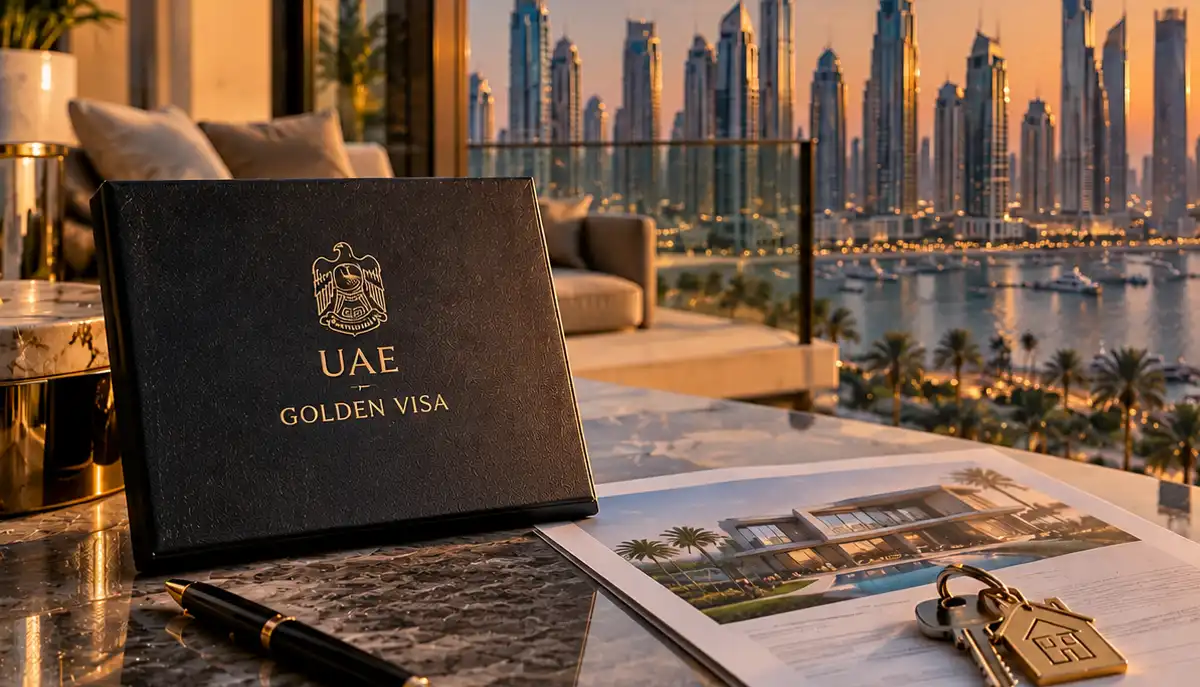
Golden visa dubai property investment has become one of the most sought-after pathways to long-term UAE residency in 2026. By owning real estate valued at AED 2 million or more, investors from any nationality can secure a renewable 10-year residency visa that covers themselves, their spouse, children, and domestic staff without needing an employer or a local sponsor. Divine LiWing, a luxury real estate consultancy based in Business Bay, Dubai, has guided hundreds of investors through this exact process.
Furthermore, recent regulatory changes in February 2026 removed the old 50% upfront payment requirement. As a result, mortgaged properties, off-plan units, and combined portfolios now qualify more easily than ever before. Whether you are an Indian NRI, a British expat, a Chinese investor, or a family from anywhere in the world, the golden visa dubai property investment route offers a rare combination of financial returns and lifestyle freedom that few countries can match.
Moreover, this guide from Divine LiWing covers every detail from the golden visa minimum property value dubai investors must meet, to off-plan eligibility rules, family sponsorship benefits, application steps, and the best communities to target. If you are also exploring the broader benefits of buying property in Dubai, this article explains how the Golden Visa adds a powerful residency advantage on top of the financial case.
What Is the Dubai Golden Visa Property Route?
Essentially, the Dubai Golden Visa is a long-term residency programme launched by the UAE government in 2019 and significantly expanded in subsequent years. Unlike traditional employment-based visas that expire when a job contract ends, the Golden Visa grants independent residency tied to an investment rather than an employer.
Specifically, the property route allows any foreign national who owns freehold real estate in Dubai valued at AED 2 million or above as certified by the Dubai Land Department (DLD) to apply for a 10-year renewable residency visa. Consequently, this visa functions as a quasi-permanent residency that can be renewed indefinitely as long as the property ownership is maintained.
Why Has the Property Route Become So Popular?
Several factors explain the surge in golden visa dubai property investment applications. Firstly, Dubai charges zero income tax on rental earnings, zero capital gains tax on property sales, and no annual property tax. Secondly, the UAE dirham is pegged to the US dollar, eliminating currency risk for dollar-denominated investors. Additionally, Dubai’s population is projected to reach 5.8 million by 2040, creating sustained demand for both residential leases and property ownership.
Because of these structural advantages, the Golden Visa transforms property ownership from a purely financial decision into a combined investment-and-lifestyle strategy. In essence, investors receive strong financial returns alongside the freedom to live, work, study, and establish businesses in the UAE.
Golden Visa Property Eligibility in 2026: The Updated Rules
Before committing capital, every investor must understand the current golden visa property eligibility 2026 requirements. Notably, two significant rule changes this year have expanded who qualifies.
The AED 2 Million Threshold
For the 10-year Golden Visa, the golden visa minimum property value dubai investors must reach is AED 2 million (approximately USD 545,000). This threshold refers to the DLD-certified market value, not the amount paid so far. In other words, the total registered value of the property determines eligibility, not the balance of payments made to date.
Additionally, investors can aggregate multiple properties to reach the AED 2 million mark. For instance, owning four studios each valued at AED 500,000 qualifies just as effectively as a single villa valued at AED 2 million. However, all properties must be located within DLD-designated freehold zones and registered under the investor’s name.

What is the minimum property value required for a Dubai Golden Visa?
The 10-year Dubai Golden Visa requires real estate with a DLD-certified total value of at least AED 2 million. Since April 2026, a separate 2-year investor visa has no minimum property value for sole owners. Both routes require freehold property in designated zones, registered with the Dubai Land Department.
The February 2026 Rule Change: No More 50% Upfront Requirement
Previously, investors needed to have paid at least 50% of the property value (or a minimum of AED 1 million) upfront before applying. In February 2026, the UAE government removed this requirement entirely. Consequently, the full purchase value on the DLD registration or Oqood certificate now counts toward the AED 2 million threshold regardless of how much the investor has actually paid.
Because of this change, mortgaged properties now qualify without restriction. Similarly, off-plan properties in the early stages of payment plans also qualify, provided the registered value meets the threshold. For investors who rely on financing or prefer developer payment structures, this reform significantly lowers the upfront capital barrier.
The April 2026 Change: 2-Year Visa Without Minimum Value
Separately, in April 2026 the DLD removed the minimum property value requirement for the shorter 2-year investor visa for sole owners. While this visa is distinct from the 10-year Golden Visa, it provides a useful entry point for investors who own property below the AED 2 million mark. Even a studio apartment valued at AED 300,000 can now qualify its sole owner for a 2-year renewable UAE residency.
10-Year Golden Visa Dubai Requirements: Full Checklist
Understanding the complete 10 year golden visa dubai requirements ensures a smooth application with no surprises. Below is every criterion an investor must satisfy.
| Requirement | Details |
|---|---|
| Property Value | AED 2 million minimum (DLD-certified value) |
| Property Type | Freehold – residential, commercial, or mixed-use in designated zones |
| Ownership | Registered in the investor’s name (sole or joint) |
| Mortgage Permitted | Yes full value counts since February 2026 (bank NOC required) |
| Off-Plan Permitted | Yes, registered with Oqood certificate from RERA-approved developer |
| Multiple Properties | Yes, aggregate value must reach AED 2 million |
| Medical Fitness | Medical test through an authorised health centre |
| Health Insurance | Valid UAE health insurance for the investor and dependents |
| Criminal Record | Clean record; no criminal background in the UAE or country of origin |
| Application Channel | ICP Smart Services, GDRFA Dubai, or authorised typing centre |
Processing typically takes 5–15 working days after documents and the medical test are completed. Furthermore, the total application fees are approximately AED 9,700–10,250, which includes DLD charges, ICA fees, medical testing, Emirates ID issuance, and insurance.
Can You Get a Golden Visa With Off-Plan Property in Dubai?
Yes and this is one of the most significant changes for 2026. Golden visa off plan property dubai eligibility is now fully confirmed, making under-construction units a viable path to long-term residency.
How Off-Plan Eligibility Works
When an investor signs a Sale and Purchase Agreement (SPA) for an off-plan property, the DLD issues an Oqood certificate, an interim registration that records the transaction before the title deed is issued at handover. Since February 2026, the full purchase value shown on the Oqood certificate counts toward the AED 2 million Golden Visa threshold.
Consequently, an investor who signs for an AED 2.5 million off-plan apartment even if only 20% has been paid on a developer payment plan qualifies to apply immediately based on the registered value. Previously, the same investor would have needed to pay at least AED 1 million before becoming eligible.
Does an off-plan property qualify for the Dubai Golden Visa in 2026?
Yes. Since February 2026, off-plan properties fully qualify for the 10-year Dubai Golden Visa. The full purchase value on the Oqood certificate counts toward the AED 2 million threshold, regardless of the amount paid to date. The property must be from a RERA-registered developer in a freehold zone.
Off-Plan vs Ready Property for Golden Visa: Which Is Better?
Both options offer distinct advantages for golden visa dubai property investment. Off-plan properties typically launch at values 15–25% below equivalent ready units, giving investors a lower entry point and built-in appreciation potential. Additionally, developer payment plans (often 1% per month or milestone-based) reduce the upfront capital requirement significantly.
Conversely, ready properties provide immediate rental income from day one and allow physical inspection before ownership. Moreover, ready units come with established market valuations and service charge histories, enabling more accurate return calculations. For a detailed comparison of these two approaches, read Divine LiWing’s guide on proven real estate investment strategies.
Golden Visa Benefits for Family: What’s Included?
Beyond the investor’s own residency, the golden visa benefits for family members represent one of the programme’s most compelling features. A single property investment creates a pathway for the entire household to live in the UAE.
Who Can Be Sponsored Under the Golden Visa?
Specifically, a Golden Visa holder can sponsor the following dependents:
-
- Spouse – full 10-year residency visa matching the investor’s duration
-
- Children – including sons of any age (sons over 18 were previously restricted) and unmarried daughters of any age
-
- Parents – on a 1-year renewable visa
-
- Domestic staff – one housemaid and one driver under the investor’s sponsorship
Consequently, a family of five, investor, spouse, and three children can all reside legally in the UAE under a single property investment. Because no employer sponsorship is needed, every family member maintains their residency even if the investor changes jobs, starts a business, or retires.
Practical Lifestyle Benefits Beyond Residency
Furthermore, the Golden Visa unlocks practical advantages that significantly improve daily life in the UAE:
-
- Banking access – opening personal and business accounts with UAE banks becomes straightforward, as Golden Visa holders are treated as residents rather than transient visitors
-
- Business establishment – the visa provides the legal foundation for mainland company formation, free zone registration, or freelance permits without an Emirati sponsor
-
- Healthcare – access to UAE healthcare plans and insurance at resident rates rather than tourist rates
-
- Education – priority enrolment at selected schools and universities for dependents of Golden Visa holders
-
- Extended absence – unlike standard residency visas that expire after six months outside the UAE, the Golden Visa allows longer absences without cancellation
-
- Global mobility – UAE residency enhances the investor’s travel profile, with visa-free or visa-on-arrival access to many countries
Can I sponsor my entire family under the Dubai Golden Visa?
Yes. A Golden Visa holder can sponsor their spouse, children of any age (sons included), parents on a renewable 1-year visa, and domestic staff. All dependents receive residency matching the investor’s visa duration. No employer sponsorship or minimum salary is required, the property investment alone qualifies the entire household.

Best Communities for Golden Visa Property Investment
Choosing the right community directly impacts both the investment return and the Golden Visa qualification process. Below are the areas that consistently deliver strong yields while meeting the AED 2 million threshold. For a complete community breakdown, explore the best areas in Dubai to live.
| Community | Property Type | Typical Value (AED) | Gross Rental Yield |
|---|---|---|---|
| Business Bay | 1–2 Bed Apartment | 1.5M – 3.5M | 6–8% |
| Dubai Marina | 1–2 Bed Apartment | 2M – 4M | 6.5–8.5% |
| Downtown Dubai | 1–2 Bed Apartment | 2M – 4M | 5–7% |
| Dubai Hills Estate | Villa / Townhouse | 3M – 8M | 5.5–7.5% |
| Palm Jumeirah | Apartment / Villa | 2.5M – 50M+ | 5–7% |
| Jumeirah Village Circle | 2–3 Bed (aggregated) | 2M – 3M combined | 7.5–9.5% |
| Dubai Creek Harbour | 1–2 Bed Apartment | 2M – 5M | 5.5–7% |
Notably, Business Bay offers a compelling balance between yield, appreciation, and location. As a Business Bay-based consultancy, Divine LiWing has extensive market data and relationships within this community, giving investors a local-knowledge advantage when selecting units and discussing terms.
Step-by-Step: How to Apply for the Golden Visa Through Property
Once you own qualifying property, the application process is structured and relatively fast. Here is the exact sequence every investor follows.
-
- Secure qualifying property – own freehold real estate with a combined DLD-certified value of AED 2 million or more. Both ready and off-plan units qualify, as do mortgaged properties with a bank No Objection Certificate.
-
- Obtain a property valuation letter – request the official valuation from the DLD confirming the property meets the AED 2 million threshold. For off-plan, the Oqood certificate serves this purpose.
-
- Gather supporting documents – passport copies, property title deed or Oqood, bank NOC (if mortgaged), passport-sized photographs, and proof of valid UAE health insurance.
-
- Complete the medical fitness test – visit a DHA-authorised health centre for the mandatory medical examination, which typically takes 1–2 hours.
-
- Submit the application – apply through ICP Smart Services (online), GDRFA Dubai, or an authorised typing centre. Subsequently, pay the application fees (approximately AED 9,700–10,250 total).
-
- Receive approval and Emirates ID – processing takes 5–15 working days. Once approved, the investor receives the Golden Visa stamp, an Emirates ID, and can then sponsor family members.
For investors based overseas, a Power of Attorney (POA) allows a representative in Dubai to handle the property ownership transfer and Golden Visa application on their behalf. Because of this flexibility, many international investors complete the entire process remotely. For a full walkthrough of the ownership process, read Divine LiWing’s guide on whether foreigners can own property in Dubai.
Ready to secure your Golden Visa through Dubai property? Contact Divine LiWing for a personalised consultation, our Business Bay team will match you with qualifying properties aligned to your investment goals.
Golden Visa Through Mortgaged Property: How Financing Works
Since the February 2026 reform, mortgaged properties qualify for the Golden Visa without any minimum equity requirement. As a result, investors can use leverage to reach the AED 2 million threshold while preserving capital for other opportunities.
Mortgage Terms for Golden Visa Investors
UAE banks offer mortgage products to both resident and non-resident property owners. Typically, UAE residents can finance up to 80% of a property’s value (for properties under AED 5 million), while non-residents can finance 50–60%. Interest rates range from 4–7% depending on the borrower’s profile and residency status.
Importantly, the bank must issue a No Objection Certificate (NOC) confirming that it permits the Golden Visa application on the mortgaged property. Furthermore, the DLD mortgage registration fee (0.25% of the loan amount plus AED 290) is payable at the time of property transfer.
Can I Use Rental Income to Service the Mortgage?
Yes and this is precisely the strategy many golden visa dubai property investment holders follow. A property valued at AED 2.5 million in Business Bay typically generates AED 150,000–200,000 in annual rental income. After deducting annual service charges and property management fees, the net income often covers or exceeds the mortgage repayment. Essentially, the resident pays for the ownership through the property itself while benefiting from both the visa and any capital appreciation.
Total Investment Required: Beyond the Property Value
Before committing to a golden visa dubai property investment, understanding the full financial picture is essential. The property value is the largest component, but several additional fees apply.
| Fee Category | Amount | When Payable |
|---|---|---|
| DLD Transfer Fee | 4% of property value | At ownership transfer |
| Agent Professional Fee | 2% of property value (often negotiable) | At ownership transfer |
| DLD Admin Fee | AED 580 | At ownership transfer |
| Oqood Registration (off-plan) | 4% of property value | At SPA signing |
| Golden Visa Application Fees | AED 9,700–10,250 | At visa application |
| Medical Fitness Test | AED 300–500 | At visa application |
| Health Insurance (annual) | AED 3,000–8,000 | Annually |
| Mortgage Registration (if financed) | 0.25% of loan + AED 290 | At ownership transfer |
Altogether, investors should budget approximately 7–9% above the property value for total acquisition and visa costs. For a property valued at AED 2 million, this means a total outlay of approximately AED 2,140,000–2,180,000 including the DLD fee, agent fee, and Golden Visa application fees.
Golden Visa vs Standard Investor Visa: Key Differences
Many investors confuse the 10-year Golden Visa with the shorter 2-year investor visa. Understanding the differences helps investors choose the right path for their situation.
| Feature | 10-Year Golden Visa | 2-Year Investor Visa |
|---|---|---|
| Minimum Property Value | AED 2 million | No minimum (sole owners, since April 2026) |
| Duration | 10 years, renewable | 2 years, renewable |
| Family Sponsorship | Spouse, children (any age), parents, domestic staff | Spouse and children under 18 |
| Extended Absence | Longer absence permitted | Standard 6-month absence rule applies |
| Business Establishment | Full mainland and free zone access without sponsor | Limited — may require additional licences |
| Renewal Condition | Maintain property ownership | Maintain property ownership |
For most investors targeting the golden visa minimum property value dubai threshold of AED 2 million, the 10-year option is clearly superior. However, the 2-year visa provides a practical entry point for those who own property below AED 2 million and want to establish UAE residency while building toward the higher threshold.
What is the difference between the 10-year Golden Visa and the 2-year investor visa?
The 10-year Golden Visa requires property worth AED 2 million or more, covers the investor and extended family, permits longer absences, and grants full business establishment rights. The 2-year investor visa has no minimum value for sole owners but offers shorter duration, limited family sponsorship, and standard absence rules. Both require freehold property registered with the DLD.
Common Mistakes That Delay or Block Golden Visa Approval
While the application process is structured, several avoidable errors can delay or disqualify investors. Knowing these pitfalls in advance prevents wasted time and capital.
-
- Ownership outside freehold zones – property located outside DLD-designated freehold areas does not qualify, regardless of its value. Always verify freehold status through the DLD or the Dubai REST app before completing any transaction.
-
- Joint ownership confusion – for jointly owned property, only one partner should apply as the primary Golden Visa holder and sponsor the other as a dependent spouse. Splitting the ownership 50/50 means neither party individually meets the AED 2 million threshold if the property value is under AED 4 million.
-
- Missing bank NOC for mortgaged property – the bank must issue a formal No Objection Certificate permitting the Golden Visa application. Without this document, the application will be rejected.
-
- Expired medical test – the medical fitness test result has a limited validity window. If the application processing extends beyond this window, the test must be repeated.
-
- Incomplete insurance documentation – valid UAE health insurance covering the investor and all sponsored dependents is mandatory at the time of application.
Working with an experienced, RERA-registered broker significantly reduces these risks. Specifically, a qualified advisor ensures every document is prepared correctly before submission, preventing rejections that can delay residency by weeks.
Why 2026 Is the Best Year for Golden Visa Property Investment
Several converging factors make 2026 a particularly strategic year for golden visa dubai property investment. Beyond the rule changes already discussed, broader market conditions favour investors entering now.
Firstly, Dubai’s population continues growing at 3–5% annually, with the D33 economic strategy targeting a doubling of GDP by 2033. Consequently, this population growth directly supports both rental demand and property values for years to come. Secondly, infrastructure expansion including the Metro Blue Line, Etihad Rail connection, and Al Maktoum International Airport development is creating new corridors of property demand.
Additionally, Dubai property remains competitively valued per square foot compared to London, New York, Hong Kong, and Singapore. Despite recent appreciation, investors still receive more space, better amenities, and higher yields for equivalent capital with the added bonus of zero tax. For a data-driven analysis of the market opportunity, read Divine LiWing’s guide on why Dubai investment is a smart move in 2026.
Why is 2026 a particularly good year for golden visa property investment in Dubai?
Three factors converge in 2026: the removal of the 50% upfront payment rule (February 2026) makes mortgaged and off-plan properties eligible, Dubai’s population and infrastructure growth sustains rental demand, and property values remain competitive versus other global cities. Additionally, rental yields of 5–9% are roughly double those available in London or New York, with zero income tax enhancing net returns.
How Golden Visa Property Investment Fits a Broader Portfolio Strategy
For sophisticated investors, the Golden Visa is not just a residency tool, it is a component of a diversified global portfolio. Dubai property returns have low correlation with Western equity and real estate markets, making them an effective diversification mechanism.
Furthermore, the USD-pegged dirham provides currency stability that complements portfolios denominated in volatile currencies. For investors from India, Nigeria, Turkey, or Egypt, Dubai property simultaneously functions as a real estate investment, a dollar-denominated store of value, and an inflation hedge. Because there is no income tax, capital gains tax, or annual property tax, the full value of the investment compounds over time without erosion.
Moreover, the ability to combine multiple properties across different communities and types creates a diversified sub-portfolio within Dubai itself. For example, an investor might pair a high-yield Business Bay apartment with a capital-growth Dubai Hills villa, both qualifying toward the AED 2 million threshold while spreading risk across market segments. For tailored strategies, explore how to invest in Dubai real estate with confidence.
Wealth Preservation and Inheritance Planning for Golden Visa Holders
Beyond income generation, Dubai property serves as a wealth preservation vehicle. Without annual property taxes eroding asset value and without capital gains taxes reducing exit proceeds, the full investment compounds over the long term.
Why Every Golden Visa Holder Needs a Registered Will
However, one critical step is frequently overlooked: inheritance planning. Without a registered will, Dubai properties belonging to non-Muslim foreign owners may be distributed under Sharia inheritance principles regardless of the owner’s nationality or personal wishes. Therefore, every foreign property owner should register a will with the DIFC Wills Service Centre or Dubai Courts within 30 days of receiving their title deed.
Specifically, the DIFC will registration process is available online and typically ranges from AED 7,500 to AED 15,000 depending on complexity. Given that the properties in question are valued at AED 2 million or more, this registration represents a small but essential investment in protecting the family’s inheritance rights.
Exploring golden visa dubai property investment opportunities? Speak with Divine LiWing’s Business Bay team for expert guidance on qualifying properties, application support, and ongoing portfolio advisory.
Tax Advantages That Amplify Golden Visa Returns
One of the most powerful aspects of golden visa dubai property investment is the UAE’s zero-tax environment. Unlike most countries that offer residency-by-investment, the UAE does not impose income tax on rental earnings, capital gains tax on property sales, or annual property tax on ownership. Consequently, the gross return on a Dubai property investment is effectively the net return, a distinction that dramatically changes the long-term wealth equation.
How Does Dubai’s Tax Structure Compare to Other Golden Visa Countries?
Several countries offer residency through property investment, but Dubai’s tax efficiency is unmatched among them. Below is a comparison of the most popular golden visa programmes worldwide.
| Country | Min. Property Investment | Income Tax on Rental | Capital Gains Tax | Annual Property Tax |
|---|---|---|---|---|
| UAE (Dubai) | AED 2M (~USD 545K) | 0% | 0% | None |
| Portugal | EUR 500K (~USD 530K) | Up to 48% | 28% | 0.3–0.8% |
| Spain | EUR 500K (~USD 530K) | 19–24% | 19–23% | 0.4–1.1% |
| Greece | EUR 250K (~USD 265K) | 15–44% | 15% | 0.1–1.15% |
| Singapore | SGD 10M+ (~USD 7.5M) | Up to 22% | Varies | 10–20% |
To illustrate the practical impact: an investor earning AED 150,000 annually from a Business Bay apartment keeps the full AED 150,000 in Dubai. In Portugal, the same investor would retain approximately AED 78,000 after income tax. Over a 10-year Golden Visa period, this difference alone amounts to AED 720,000 in additional retained earnings before accounting for any capital gains tax savings at the time of sale.
Essentially, Dubai’s tax structure means that every dirham of rental income and every percentage point of capital appreciation flows directly to the investor’s wealth rather than to a government treasury. For a comprehensive breakdown of all financial advantages, explore the benefits of buying property in Dubai.
Golden Visa for Specific Investor Profiles
Different investor profiles have different priorities when structuring their golden visa dubai property investment. Below are the most common scenarios Divine LiWing advises on.
Indian NRIs: The Largest Buyer Segment
Indian nationals represent the largest foreign property ownership group in Dubai, driven by the rupee-to-dollar advantage, strong diaspora networks, and direct flights connecting major Indian cities to Dubai. For Indian NRIs, the Golden Visa provides a stable second residency with zero income tax, a significant advantage given India’s 30% income tax bracket for high earners.
Furthermore, the ability to sponsor ageing parents on a 1-year renewable visa makes Dubai an attractive multigenerational base. Many Indian families structure their ownership with one member holding the primary Golden Visa and sponsoring the rest as dependents.
British and European Investors: Post-Brexit Diversification
British investors increasingly view Dubai as a tax-efficient alternative to European property markets. With UK capital gains tax at 18–28% and stamp duty up to 12%, the UAE’s zero-tax structure represents a dramatic improvement in net returns. Moreover, the Golden Visa provides continued access to a cosmopolitan lifestyle without the immigration complexity that now applies within the European Union post-Brexit.
Chinese and East Asian Investors: Currency and Capital Preservation
For investors from China, Hong Kong, and Southeast Asia, Dubai property offers USD-pegged stability in a region where currency volatility can erode returns. Additionally, the Golden Visa provides an alternative residency base outside the investor’s home jurisdiction, adding a layer of geopolitical diversification to their portfolio.
Business Owners and Entrepreneurs
Entrepreneurs who combine property ownership with business establishment in Dubai create a self-reinforcing cycle. Specifically, the Golden Visa obtained through property investment provides the legal foundation for mainland or free zone company formation. Subsequently, business income can fund further property acquisitions, while the growing portfolio strengthens the visa’s renewal basis. For guidance on how to structure property alongside business investment, explore why investors choose Dubai real estate.
Off-Plan vs Ready Property: Golden Visa Strategy Comparison
Investors targeting the Golden Visa through property face a strategic choice between off-plan and ready units. Each approach has distinct advantages depending on the investor’s cash position, timeline, and risk tolerance.
Off-Plan Strategy: Lower Entry, Higher Appreciation Potential
Off-plan properties from established developers like Emaar, DAMAC, Sobha, and Meraas typically launch at values 15–25% below equivalent completed units. Because developer payment plans spread the total amount across 3–5 years, an investor can secure a Golden Visa with a relatively modest initial outlay.
For instance, an AED 2.5 million off-plan apartment in Dubai Creek Harbour might require only a 20% initial payment (AED 500,000) plus the 4% DLD registration fee (AED 100,000). However, the Oqood certificate registers the full AED 2.5 million value qualifying the investor for the Golden Visa immediately. Subsequently, the remaining 80% is paid through monthly contributions over the construction period.
Moreover, the appreciation potential is significant. Off-plan units in flagship communities have historically appreciated 25–45% between launch and handover. Consequently, the investor benefits from both residency and a capital gain before the property is even completed.
Ready Property Strategy: Immediate Income, Verified Returns
Alternatively, ready properties provide immediate rental income from day one, allowing the investor to service financing or simply enjoy cash flow while holding the Golden Visa. Additionally, ready units can be physically inspected, and their service charge histories and rental performance can be verified against actual data rather than projections.
For investors who prioritise certainty over maximisation, ready property in established communities like Business Bay or Dubai Marina offers the safest golden visa dubai property investment path. The community infrastructure is complete, the resident profile is established, and the exit liquidity is proven.
How to Choose the Right Property for Golden Visa Qualification
Not every AED 2 million property delivers the same investment return or visa experience. Selecting the right unit requires evaluating several factors beyond the value threshold.
Five Factors Every Golden Visa Investor Should Evaluate
-
- Freehold zone verification – confirm the property sits within a DLD-designated freehold zone using the Dubai REST app or DLD portal. Properties outside freehold zones cannot be registered in a foreign investor’s name and will not qualify for any visa.
-
- Developer track record – for off-plan, verify the developer’s completion history through the DLD. Established developers with decades of delivery history provide greater confidence in both construction quality and timeline adherence.
-
- Service charges per square foot – annual service charges range from AED 10 to AED 30 per square foot across Dubai communities. A property with AED 25/sqft charges on an 800 sqft apartment means AED 20,000 per year in mandatory fees directly compressing net yields.
-
- Rental demand and occupancy data – ask for actual occupancy rates in the specific building, not community averages. Some buildings within the same community consistently underperform due to older facilities or poor management.
-
- Exit liquidity – prefer communities with high monthly transaction volumes. Areas like Business Bay, Dubai Marina, and JVC consistently rank among Dubai’s most liquid resale markets, ensuring the investor can sell within 4–12 weeks when needed.
For high-net-worth investors considering premium properties, Divine LiWing’s luxury real estate Dubai guide covers the ultra-prime segment in detail from Palm Jumeirah mansions to Emirates Hills estates.
Golden Visa Application Documents: Complete Checklist
Having your documents prepared before starting the application prevents delays and rejected submissions. Below is the complete documentation checklist for a golden visa dubai property investment application in 2026.
Primary Applicant Documents
-
- Valid passport (minimum 6 months remaining validity) with a clear copy of the bio page
-
- Passport-sized photographs (white background, recent)
-
- Property title deed from the Dubai Land Department or Oqood certificate for off-plan properties
-
- DLD property valuation letter confirming the value meets or exceeds AED 2 million
-
- Bank No Objection Certificate (NOC) if the property is mortgaged
-
- Medical fitness test result from a DHA-authorised health centre (valid for a limited period, schedule this close to submission)
-
- Valid UAE health insurance policy covering the applicant and all dependents
-
- Emirates ID application receipt (processed alongside the visa)
Dependent Sponsorship Documents
For each family member being sponsored, the following additional documents are required:
-
- Spouse — marriage certificate (attested by the UAE embassy in the country of origin and the MOFA)
-
- Children — birth certificates (attested through the same process)
-
- Parents — proof of relationship (attested birth certificate of the sponsor) and a separate medical fitness test
-
- All dependents — passport copies, photographs, and individual health insurance coverage
Attestation requirements can vary by nationality, so investors should confirm the specific process with their country’s UAE embassy before travelling. Generally, document attestation takes 1–3 weeks depending on the country of origin.
Where to Submit the Application
Applications can be submitted through three channels: the ICP Smart Services portal (online), a GDRFA Dubai service centre (in-person), or an authorised typing centre (assisted submission). Subsequently, most investors find the typing centre route most convenient, as the staff guides them through each form and verifies document completeness before submission.
Additionally, several real estate consultancies including Divine LiWing offer Golden Visa application support as part of their advisory service, connecting investors with trusted PRO (Public Relations Officer) services that handle the entire submission process.
Short-Term Rental Strategy for Golden Visa Properties
Many golden visa dubai property investment holders maximise their returns by operating their property as a short-term holiday home during periods they are not residing in Dubai. Because the Golden Visa permits extended absences, investors can live abroad for much of the year while their Dubai property generates premium rental income.
How Holiday Home Licensing Works
Dubai’s Department of Economy and Tourism (DET) regulates short-term rentals through a mandatory holiday home permit system. Property owners must register with the DET, meet quality standards, and comply with community association rules before listing on platforms like Airbnb, Booking.com, or Vrbo.
Importantly, short-term rental properties in tourist-heavy communities such as Dubai Marina, Downtown Dubai, JBR, and Palm Jumeirah can generate 15–30% higher annual income compared to standard long-term lease agreements. However, the management intensity is greater like guest communication, check-in coordination, cleaning between stays, and platform listing optimisation all require either personal involvement or a specialised holiday home management company (typically charging 15–25% of gross rental income).
Combining Golden Visa Residency with Short-Term Rental Income
A common strategy involves blocking personal-use periods (typically December–March when the investor visits Dubai) and maximising rental income during the remaining months. Consequently, the property serves a dual purpose, both a personal residence during visits and an income-generating asset during absence. For investors who travel frequently, this approach offers the best of both worlds.
Furthermore, the rental income from a well-managed short-term property often exceeds the mortgage contribution (for financed properties), effectively making the property self-financing while the investor retains the Golden Visa and capital appreciation benefits.
Real-World Case Study: A Typical Golden Visa Investment Journey
To illustrate how golden visa dubai property investment works in practice, consider the following scenario based on a composite of actual client experiences at Divine LiWing.
The Investor Profile
An Indian NRI based in London identifies Dubai as a second home and residency base for his family of four (spouse and two children). His primary objectives are: secure long-term UAE residency, generate passive rental income, and preserve capital in a USD-pegged asset.
The Property Selection
After consulting with Divine LiWing’s advisory team, the investor selects a 2-bedroom apartment in Business Bay valued at AED 2.3 million. He finances 60% through a UAE bank mortgage (AED 1,380,000 at 5.5% interest) and pays the remaining 40% (AED 920,000) plus the 4% DLD fee (AED 92,000) in cash. His total upfront outlay is approximately AED 1,080,000 (roughly USD 294,000).
The Golden Visa Application
Within two weeks of receiving the title deed, the investor flies to Dubai for three days. During this visit, he completes the medical fitness test, submits the Golden Visa application through an authorised typing centre, and provides biometric data. He pays approximately AED 10,000 in visa fees. Twelve working days later, he receives the Golden Visa approval covering himself, his wife, and both children.
The Ongoing Returns
Subsequently, the Business Bay apartment generates AED 140,000 per year in long-term lease income. After deducting annual service charges (AED 16,000), property management fees (AED 11,200), and mortgage repayments (approximately AED 96,000 per year), the investor nets roughly AED 16,800 annually while the mortgage principal reduces with each payment and the property appreciates in value. Essentially, the resident functions as a partial contribution toward the investor’s overall ownership, while the Golden Visa and capital appreciation come as additional benefits at zero tax.
Golden Visa Renewal: What Happens After 10 Years?
The 10-year Golden Visa is renewable indefinitely, provided the investor continues to own qualifying property at the time of renewal. Specifically, the renewal process mirrors the initial application, the investor submits updated ownership documents, completes a fresh medical test, and pays renewal fees.
What If the Property Value Changes?
An important consideration is that the DLD-certified value at the time of renewal matters, not the original value. If property values have appreciated (as they generally have in Dubai’s growth trajectory), the investor benefits from an easier qualification. Conversely, in a hypothetical market correction, the DLD valuation at renewal must still meet the AED 2 million threshold.
Because of this, investors targeting long-term Golden Visa renewal should acquire property in communities with strong structural demand drivers, population growth corridors, proximity to infrastructure projects, and limited new supply. These communities are most likely to maintain or increase their DLD valuations over time.
Can I Transfer the Golden Visa to a New Property?
Yes. Investors who sell their qualifying property and own another qualifying property (or combination of properties) worth AED 2 million or more at the time of renewal can maintain their Golden Visa seamlessly. In practice, many investors upgrade from apartments to villas, or diversify across multiple communities, while maintaining continuous visa eligibility.
How Dubai’s Golden Visa Compares to Other Residency-by-Investment Programmes
Investors exploring golden visa dubai property investment often compare the UAE programme with alternatives in Europe, the Caribbean, and Asia. While each programme has its own structure, Dubai’s combination of zero tax, strong yields, and lifestyle quality makes it uniquely competitive.
Dubai vs Portugal Golden Visa
Portugal’s Golden Visa programme has historically been one of Europe’s most popular, requiring a minimum property investment of EUR 500,000 (approximately USD 530,000). However, Portugal eliminated residential property as a qualifying route in late 2023, limiting investors to commercial real estate, rehabilitation projects, or fund investments. Moreover, Portuguese rental income is taxed at rates up to 48%, and capital gains tax stands at 28%. By comparison, Dubai retains residential property eligibility, charges zero tax on all property-related income, and offers a more straightforward application process.
Dubai vs Greece Golden Visa
Greece offers one of Europe’s lowest entry points at EUR 250,000, though this threshold has been increased to EUR 500,000 in high-demand areas like Athens and Thessaloniki. While Greece provides Schengen Zone access (a significant advantage for travel), Greek rental income is taxed at 15–44% and the property market’s capital appreciation lags behind Dubai’s growth trajectory. Additionally, Greek bureaucratic processing times often extend to 6–12 months, compared to Dubai’s 5–15 working days.
Dubai vs Caribbean Citizenship Programmes
Countries like St. Kitts, Dominica, and Grenada offer citizenship (not just residency) through property investment starting from USD 200,000. However, these programmes provide a passport rather than a place to live, very few investors actually relocate to the Caribbean. Furthermore, the properties available in these programmes are typically resort developments with limited rental demand and challenging resale liquidity. Dubai, conversely, offers a genuine lifestyle destination with world-class infrastructure, a diverse economy, and a deep property resale market.
Why Dubai Wins on Net Returns
Ultimately, the deciding factor for most financial investors is net return after tax. A property generating 7% gross yield in Dubai delivers 7% net. The same property in Lisbon delivers approximately 3.5% net after income tax. In Athens, the net figure drops to 4–5% after Greek taxation. Over a 10-year Golden Visa period, the cumulative difference in retained earnings from a single property can exceed AED 500,000 money that stays in the investor’s pocket in Dubai but would go to a European tax authority elsewhere.
Working With Divine LiWing: Your Golden Visa Property Partner
As a Business Bay-based luxury real estate consultancy, Divine LiWing specialises in helping international investors structure their golden visa dubai property investment from initial research through to visa approval and ongoing portfolio management.
What Divine LiWing’s Advisory Team Provides
Specifically, Divine LiWing’s service covers the complete investor journey:
-
- Property selection – matching each investor with qualifying properties aligned to their financial objectives, risk profile, and preferred community
-
- DLD valuation support – ensuring the registered property value meets or exceeds the AED 2 million threshold before proceeding with the visa application
-
- Documentation preparation – assisting with every document in the Golden Visa checklist, including coordination with attestation services and bank NOC requests
-
- Application submission – connecting investors with trusted PRO services that handle the entire visa submission, medical test scheduling, and Emirates ID processing
-
- Post-visa portfolio advisory – ongoing guidance on rental management, property upgrades, and portfolio diversification as the investor’s wealth and objectives evolve
Whether you are a first-time investor exploring residency options or an experienced property owner looking to structure your existing portfolio for Golden Visa qualification, contact Divine LiWing today for a personalised consultation with our expert team.
Frequently Asked Questions
What is the minimum property value for the Dubai Golden Visa?
The 10-year Golden Visa requires freehold property with a DLD-certified value of at least AED 2 million. Multiple properties can be combined to reach this threshold. Since April 2026, the shorter 2-year investor visa has no minimum property value for sole owners.
Can I get a Golden Visa if my Dubai property is mortgaged?
Yes. Since February 2026, the 50% upfront equity requirement was removed. The full DLD-registered property value counts toward the AED 2 million threshold regardless of the outstanding mortgage balance. A bank No Objection Certificate (NOC) is required with the application.
How long does the Golden Visa application take?
Once all documents are submitted and the medical fitness test is completed, processing typically takes 5–15 working days. GDRFA Dubai approvals can sometimes be faster. Total fees, including DLD charges, ICA fees, medical, Emirates ID, and insurance, are approximately AED 9,700–10,250.
Does the Golden Visa cover my spouse and children?
Yes. A Golden Visa holder can sponsor their spouse, children of any age (including sons over 18 and unmarried daughters), parents on a 1-year renewable visa, and domestic staff. All dependents receive residency matching the investor’s visa duration.
Which Dubai communities are best for Golden Visa property investment?
Business Bay, Dubai Marina, Downtown Dubai, Dubai Hills Estate, and Palm Jumeirah offer the strongest combination of Golden Visa eligibility, rental yields, and capital appreciation. Business Bay and Dubai Marina typically deliver the best balance of yield (6–8.5%) and growth.
Can I apply for the Golden Visa from outside the UAE?
The ownership transfer can be completed remotely using a Power of Attorney (POA). However, the Golden Visa medical fitness test and biometric data collection require the investor to be physically present in the UAE. Many investors fly in for 2–3 days to complete the final steps.
What happens to my Golden Visa if I sell the property?
If you sell the qualifying property without replacing it with another property of equal or greater value, the Golden Visa will not be renewed at expiry. However, the visa remains valid until its current expiry date. Consequently, many investors sell and repurchase within the same visa period to maintain eligibility.
Is commercial property eligible for the Golden Visa?
Yes. Foreign nationals can own commercial property in Dubai within designated freehold areas, and commercial units count toward the AED 2 million Golden Visa threshold. However, residential property remains the most popular and straightforward route for most investors.
Pingback:Mortgage for Property in Dubai | Foreigner & Expat Guide (2026)
Pingback:Properties in Sharjah 2026 | choose Stability Over Risk
Pingback:Dubai Investment 2026 | 5 Reasons to Buy Property Now
Pingback:Freehold vs Leasehold Property in Dubai | Key Differences (2026)